
What children actually learn
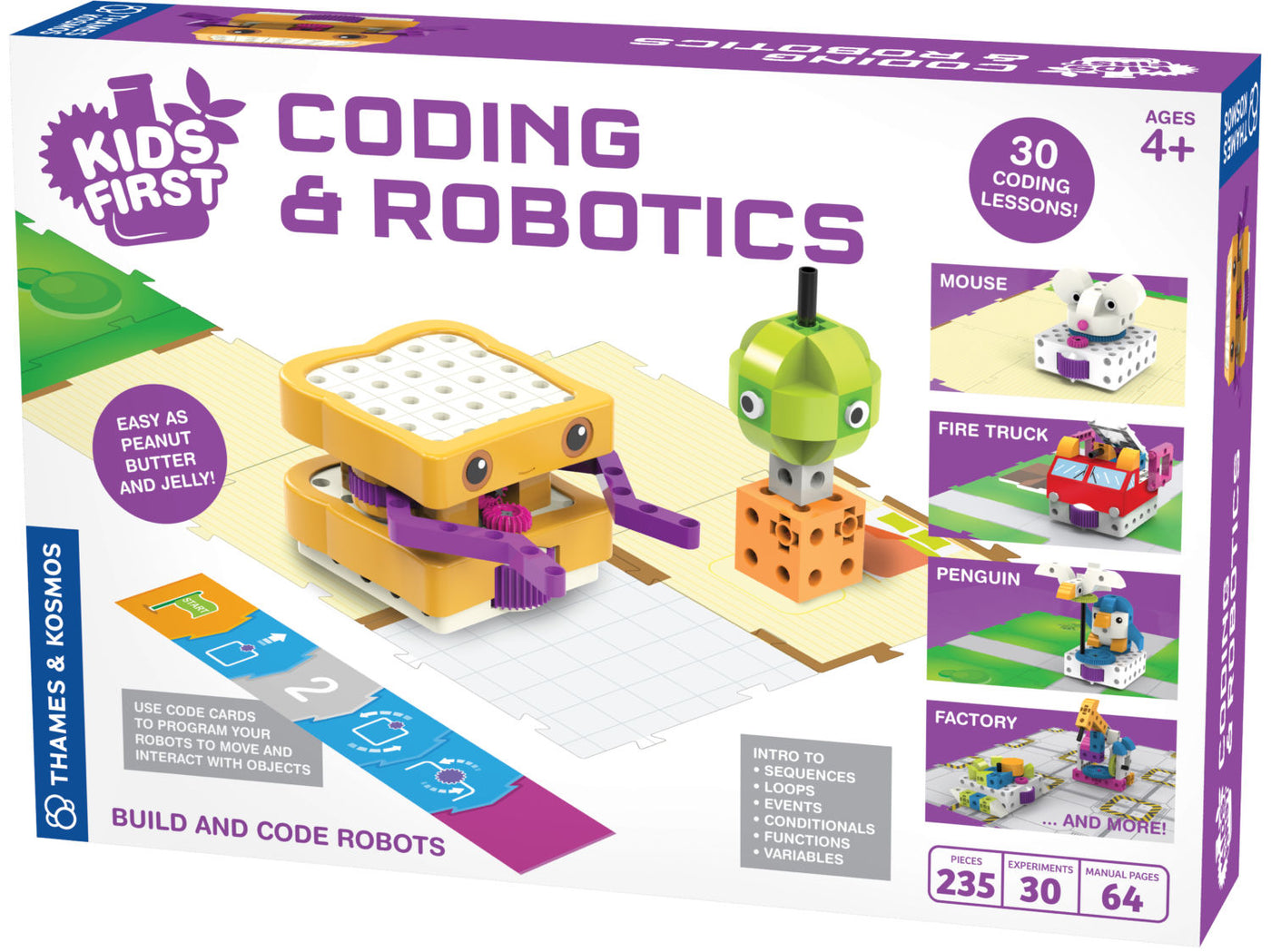
Thames & Kosmos publishes curriculum correlations for the kit. The K–2-aligned activities include modeling step-by-step algorithms, creating programs with sequences and simple loops, planning expected outcomes and debugging errors. Later lessons also expose children to concepts such as variables, conditions and functions. That gives the kit a clearer instructional progression than a robot that simply reacts to preset buttons.
How the screen-free coding works
The child builds physical models around the Sammy robotic base and arranges code or map cards to control behavior. Because the code is represented physically, an error can be discussed as “which step or card needs to change?” rather than requiring a child to understand text syntax. Stories give the programs a goal, which can help early elementary children understand why they are building a sequence.
Strengths
- No tablet, Wi-Fi or child account required for the core activity
- Structured progression from basic algorithms into loops and debugging
- Physical models make programs tangible
- Story context can make coding goals easier for younger learners to understand
Tradeoffs
- More pieces and build steps than a ready-to-run robot
- Adult help may be needed for new vocabulary, difficult models or troubleshooting
- Organization matters in homes with younger siblings
- Less instant than Botley for a child who wants to code immediately
Age-five and age-six fit
For a five-year-old, this is best when the child already likes construction, stories and step-by-step challenges and an adult can help with the first models. At six, many children can take more ownership of arranging the code, predicting the result and debugging. The kit's K–2 curriculum makes it especially useful across that transition.
Kids First vs. Botley 2.0
Choose Botley 2.0 for the fastest screen-free first coding experience: enter a route and watch the robot move. Choose Kids First Coding & Robotics when the family wants a more structured story-and-model curriculum and is comfortable with additional parts and setup.
Safety and organization
Thames & Kosmos support materials note that adult help may be useful when interpreting new terms, assembling difficult models or explaining what the robot is doing. Treat that as productive scaffolding, but avoid taking over the coding decision itself.
Verdict
Kids First Coding & Robotics is a stronger educational fit than its old generic review suggested: its value comes from connecting physical models to a real progression of algorithms, sequences, loops and debugging. It is a good age-five-to-six option for families who prefer screen-free, story-driven lessons and do not mind more setup than a one-piece coding robot.