
What the model teaches
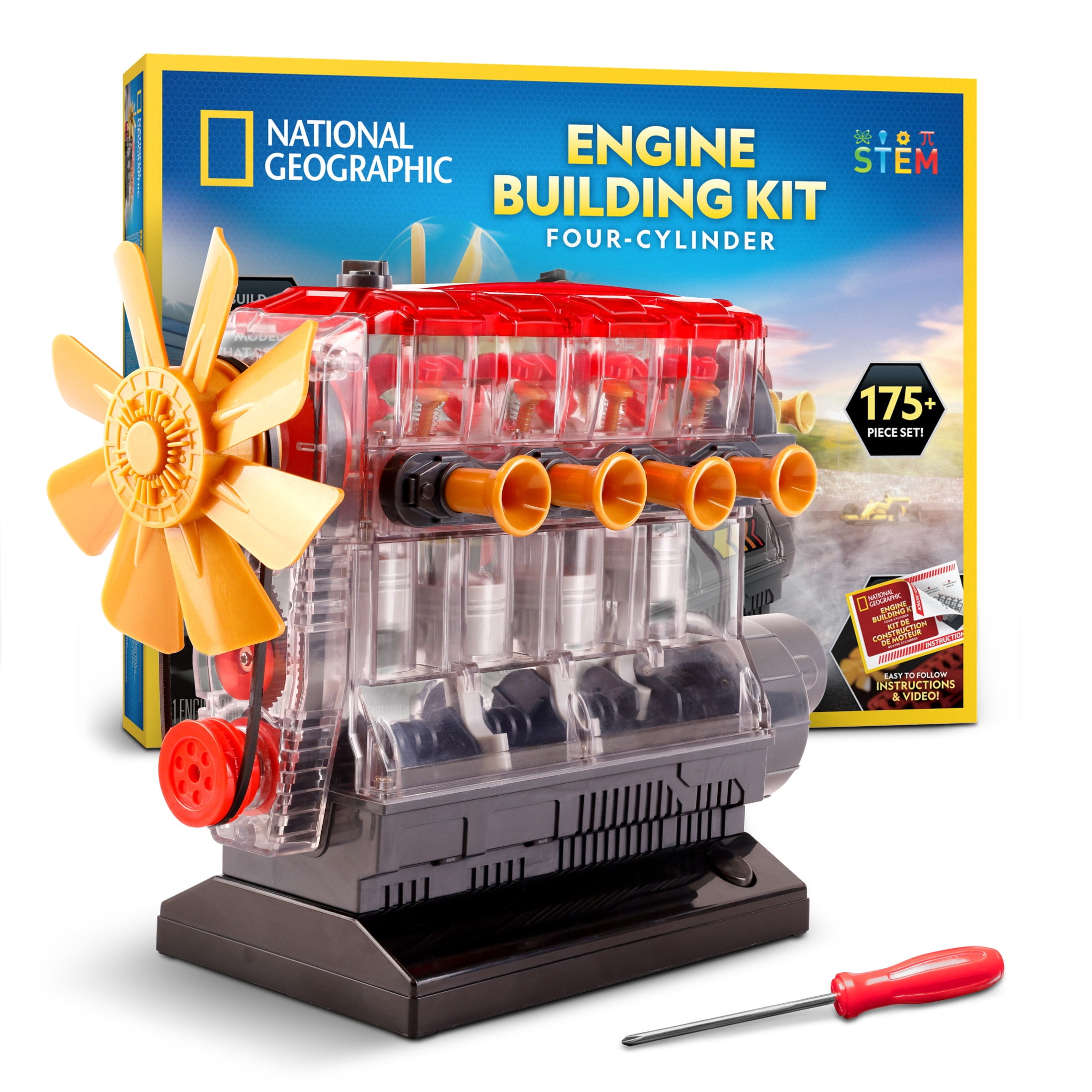
The clear housing is the main educational advantage. Once assembled and powered, children can trace how gears coordinate the pistons and valves instead of seeing an engine only as a sealed object. That makes it useful for mechanical curiosity, automotive STEM and cause-and-effect discussions.
What the build demands
More than 175 pieces make this a real assembly project. The included tools and illustrated instructions support the build, but younger or less experienced builders may need adult help. The finished model requires three AA batteries, which are not included.
Who should buy it?
Best fit is an older child who already enjoys machines, engines, vehicles, model kits or taking things apart to understand how they work. A child mainly looking for fast action play may lose interest before the assembly is complete.
Strengths
- Moving pistons, valves and gears are visible through the clear model
- Strong mechanical-engineering connection
- Build-and-observe format rewards persistence
- Useful bridge between toy vehicles and real engine concepts
Tradeoffs
- 175+ pieces create a substantial setup commitment
- Three AA batteries are required separately
- Small components need careful storage
- Sale pricing and retailer inventory can change
Verdict
For a mechanically curious child, this fills a gap that many general STEM kits miss: it turns internal-combustion motion into something visible and buildable. It is a better educational fit for patient builders than for kids expecting a quick-play motorized toy.